MaSooM Studios: teck and konodge
Showing posts with label teck and konodge. Show all posts

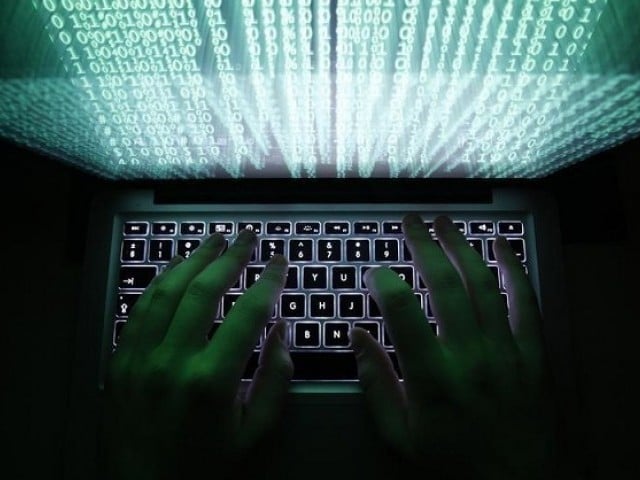
A man types on a computer keyboard in Warsaw in this February 28, 2013 illustration file picture. 
PHOTO: REUTERS
A man types on a computer keyboard in Warsaw in this February 28, 2013 illustration file picture. PHOTO: REUTERS
More governments are following the lead of Russia and China by manipulating social media and suppressing dissent online in a grave threat to democracy, a human rights watchdog said Tuesday.
A study of internet freedom in 65 countries found 30 governments are deploying some form of manipulation to distort online information, up from 23 the previous year.
These efforts included paid commentators, trolls, “bots” — the name given to automated accounts — false news sites and propaganda outlets, according to the 2017 “Freedom on the Net” report by human rights group Freedom House.
The report said online manipulation and disinformation tactics played an important role in elections in at least 18 countries over the past year, including the United States.
“The use of paid commentators and political bots to spread government propaganda was pioneered by China and Russia but has now gone global,” said Michael Abramowitz, president of Freedom House.
“The effects of these rapidly spreading techniques on democracy and civic activism are potentially devastating.”
Sanja Kelly, director of the Freedom on the Net project, explained such manipulation is often hard to detect, and “more difficult to combat than other types of censorship, such as website blocking.”
The organization said 2017 marked a seventh consecutive year of overall decline in internet freedom, as a result of these and other efforts to filter and censor information online.
Freedom House said China was the world’s worst abuser of internet freedom for a third straight year, due to stepped-up online censorship, a new law cracking down on anonymity online and the imprisonment of dissidents using the web.
Other countries also increased their efforts to censor and manipulate information, the report said.
This included a “keyboard army” of people employed and paid $10 a day by the Philippine government to amplify the impression of widespread support of a brutal drugs crackdown, and Turkey’s use of an estimated 6,000 people to counter government opponents on social media.
Meanwhile, as Russia sought to spread disinformation to influence elections in the US and Europe, the Kremlin also tightened its internal controls, the report said.
Bloggers who attract more than 3,000 daily visitors must register their personal details with the Russian government and abide by the law regulating mass media — while search engines and news aggregators are banned from including stories from unregistered outlets.
The study also found governments in at least 14 countries restricted internet freedom in a bid to address content manipulation. In one such example, Ukraine blocked Russia-based services, including the country’s most widely used social network and search engine, in an effort to crack down on pro-Russian propaganda.
“When trying to combat online manipulation from abroad, it is important for countries not to overreach,” Kelly said.
“The solution to manipulation and disinformation lies not in censoring websites but in teaching citizens how to detect fake news and commentary. Democracies should ensure that the source of political advertising online is at least as transparent online as it is offline.”
Freedom House expressed concern over growing restrictions on VPNs — virtual private networks which allow circumvention of censors — which are now in place in 14 countries.
It said internet freedom also took a hit in United States over the past year.
“While the online environment in the United States remained vibrant and diverse, the prevalence of disinformation and hyperpartisan content had a significant impact,” the report said.
“Journalists who challenge Donald Trump’s positions have faced egregious online harassment.”

Tesla Model S unveiled. 
PHOTO: AFP
Tesla Model S unveiled. PHOTO: AFP
US automaker Tesla on Monday was hit with a class-action lawsuit claiming its California production plant is a “hotbed for racist behavior.”
The lawsuit filed in California state court in Oakland is at least the third filed this year by black workers who say they were addressed using racial slurs and that the company ignored their complaints.
But Monday’s lawsuit, filed by former Tesla employee Marcus Vaughn, is the first to bring those claims on behalf of a large class of black workers at the automaker’s Fremont, California factory.
Tesla did not respond to a request for comment.
The company is also facing lawsuits accusing it of discrimination against gay and older workers. It has denied those claims.
Vaughn in the lawsuit says he was routinely called the “n-word” by supervisors and coworkers after he began working at the factory in April. He says he complained in writing to human resources officials, but the company never investigated his claims.
Vaughn says he was fired in October for “not having a positive attitude.” He is seeking unspecified damages under a California anti-discrimination law.
The growing number of discrimination lawsuits against Tesla come as the company is also facing a unionization campaign from the United Auto Workers.
In February, Tesla chief executive Elon Musk told the website Gizmodo that an employee who wrote a blog post criticizing the company was “paid by the UAW to join Tesla and agitate for a union.”
The union and the worker denied that he had been paid by UAW. Last month, the union filed a complaint with a federal labor board on behalf of scores of workers who it says were laid off because they support the union.
The company denied the claims and said the decision was based on employee performance reviews.

Lamborghini has created the world's first self-healing sports car. 
PHOTO: LAMBORGHINI
Lamborghini has created the world's first self-healing sports car. PHOTO: LAMBORGHINI
With the Self-driving and Electric car boom witnessed across the Globe, it was only a matter of time before Lamborghini got involved in the market.
The Italian sports car manufacturer teamed up Massachusetts Institute of Technology (MIT) to unveil the world’s first self-healing sports car.
The Terzo Millennio repairs any cracks and damages that it detects.
“Exactly one year ago we have signed an agreement with the MIT-Italy Program at the Massachusetts Institute of Technology” according to Stefano Domenicali, CEO of Lamborghini.
They unveiled the concept car last week.
The sensors on the car detect any bodywork or engine repair that it needs. Not only that, it also self-repairs using the nanotubes that prevent any damage from spreading.
“It is about creating new concepts to shape the future of sports cars, facing what is impossible today to shape the reality of tomorrow,” according to a statement issued by Lamborghini.
With “groundbreaking energy storage systems, innovative materials, breathtaking propulsion and design,” the concept is certainly a revolutionary design taking the future of electric cars to another level.
In terms of power; the car would have 4 electric motors placed, one integrated into each wheel.
The automaker has also mentioned that they will be including supercapacitors which are like the traditional batteries but able to charge within seconds.
The only downside is that the power might have low energy density and will not have the capability of storing enough storage causing problems for long distance journeys.
This article originally appeared on The Telegraph.


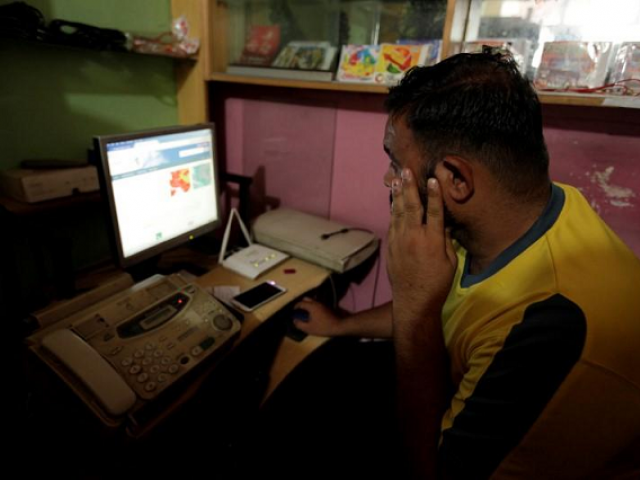
A man explores social media on a computer at an internet club in Islamabad, Pakistan.
PHOTO: REUTERS
A man explores social media on a computer at an internet club in Islamabad, Pakistan. PHOTO: REUTERS
Pakistan ranks “Not Free” for sixth consecutive year in the Freedom on the Net Report
Freedom House released the Freedom on the Net (FoTN) report for the year 2017 which assesses internet freedom in 65 countries, accounting for 87 per cent of internet users worldwide. The report primarily focuses on developments that occurred between June 2016 and May 2017.
Meticulously researched by Digital Rights Foundation and research analysts at Freedom House, the FoTN 2017 report for Pakistan is an attempt to collate and evaluate the state-level violations of user rights, internet freedom, and implementation of censorship in Pakistan. The report ranks Pakistan “Not Free” for the sixth consecutive year.
Here are some of the key findings:
Mobile internet service was shut down for more than a year in the Federally Administered Tribal Areas, starting in June 2016
The Prevention of Electronic Crimes Act enacted in August 2016 introduced stronger censorship and surveillance powers with inadequate oversight.
A teenager was arrested for allegedly “liking” a blasphemous post on Facebook in September 2016; a court awarded the death penalty in a separate Facebook blasphemy case in June 2017.
Five bloggers known for criticizing authorities were abducted in January 2017; one later said a government institution had detained and tortured him. The fifth was still missing in late 2017.
Social media personality Qandeel Baloch was murdered by her brother in July 2016 for videos she shared on Facebook; separately in April 2017, journalism student Mashal Khan was killed by a mob who accused him of online blasphemy.
Hackers stepped up attempts to target government critics, attacking a major media website.
The report further notes that the Internet Freedom Status for the year 2017 has in fact worsened for Pakistan from that in 2016. With the ranking of 18 out of 25 for Obstacles to Access for 2016, the bar sits at 19 for the year 2017; and Violations of User Rights which sat at 31 out of 40 for the year 2016, it’s now at 32.
The overall ranking for Pakistan closes at 71 out of 100 (100 being the worst) for this year, two points down from last year’s ranking – declaring Pakistan “Not Free” for yet another year.
“While the laws and legislations are persistently passed to regulate the digital spaces, the Government of Pakistan is constantly stifling citizens’ right to free online media.
The government’s increased control on the internet is an example of the sort of democracy that Pakistan is governed under. These draconian legislations not only limit civil liberties, but also attack citizens’ constitutional right to freedom of expression.” Nighat Dad, the Executive Director of Digital Rights Foundation states.
“Moreover, the disproportionate measures by the government to suspend internet services in the already disrupted areas of Pakistan along with increased surveillance have led to further censorship of dissent in the online platforms points at the chilling effect on the way people choose to express themselves online.” she adds.
Freedom on the Net and Freedom House’s research seeks to address the failings of the state in protecting the rights of citizens by compiling and analysing evidence that activists and concerned citizens can use to push for greater democracy online as well as offline.

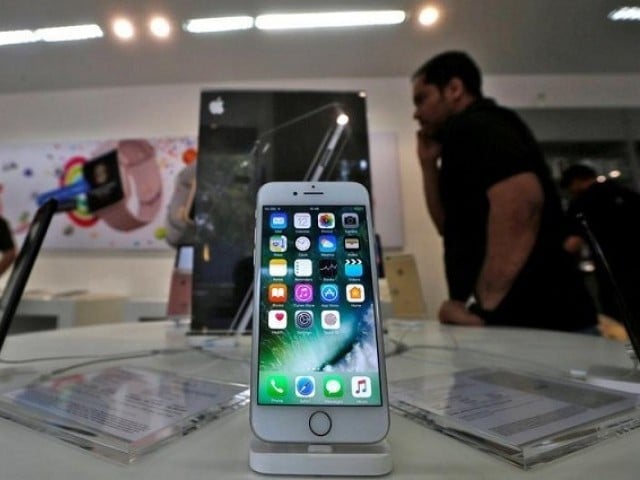
FILE PHOTO: An iPhone is seen on display at a kiosk at an Apple reseller store in Mumbai, India, January 12, 2017. Picture taken January 12, 2017
PHOTO: REUTERS
FILE PHOTO: An iPhone is seen on display at a kiosk at an Apple reseller store in Mumbai, India, January 12, 2017. Picture taken January 12, 2017 PHOTO: REUTERS
NEW DELHI: Apple Inc has agreed to give limited help to the Indian government to develop an anti-spam mobile application for its iOS platform, after refusing to do so based on privacy concerns, according to sources and documents seen by Reuters.
The US tech giant has been locked in a tussle with India’s telecoms regulator for more than a year. Officials complained Apple dragged its feet on advising the government how to develop an app that would allow iPhone users to report unsolicited marketing texts or calls as spam.
The government app was launched on Google’s Android platform last year, but an industry source with direct knowledge of the matter said Apple pushed back on requests for an iOS version due to concerns that a government app with access to call and text logs could compromise its customers’ privacy.
Facing public criticism from the regulator, Apple executives flew to New Delhi last month and told officials the company would help develop the app, but only with limited capabilities, according to a government official aware of the matter. Apple’s executives have told India that its current iOS platform might not allow for some of the government’s requests, such as making call logs available within the app that would allow users to report them as spam, the official said.
“They (Apple) will help develop an app which, to an extent, can solve the requirements,” said the official. An Apple spokesman confirmed that the new iOS features to combat spam text messages would help the government build the app, but did not comment on the app’s potential inability to access call logs for reporting spam, as the Android version does.
The spokesman said Apple had not changed its stance on privacy. Apple’s stand-off with the regulator comes at a time when it is seeking greater access in India, the world’s third-largest smartphone market.
The company has been lobbying the government for tax breaks to expand its phone assembly operations in the country, where it reported doubling its revenue versus the previous year for the quarter ending September 30. Balancing growth and market share with protecting customer privacy has become a defining challenge for global tech companies such as Apple, which regularly clash with governments over allowing access to content on their devices, especially for law enforcement needs.
“This has now become more of an ego tussle between Apple and the regulator,” said Neil Shah of Hong Kong-based technology research firm Counterpoint Research. He added that Apple was unlikely to agree to any requests specific to India because of the precedent that would set.
The chairman of the Telecom Regulatory Authority of India (TRAI) RS Sharma said he was unhappy with Apple for not responding swiftly to the government’s requests. “We’ve told them they are harming their consumers,” Sharma told Reuters in an interview. “I hope good sense prevails upon them.” Apple did not comment on TRAI’s criticism, but said that it had taken time to develop a privacy-friendly solution.
App tussle, privacy woes
Pesky marketing calls and unsolicited commercial text messages have become a big problem in India. Despite mobile users having the option to register themselves under a so-called “do not disturb” service to block marketers, businesses have gamed the system by using multiple phone numbers for promotions.
TRAI’s anti-spam mobile application, also called Do Not Disturb, has been downloaded more than 100,000 times from the Google Android app section. Before the app launches, it asks the user to allow it access to contacts and view text messages. Users can then start reporting numbers as spam.
A spokesman for Google, a unit of Alphabet Inc, did not directly comment on the app, but said: “We believe in openness and in the ability of users to make purchasing and downloading choices without top-down enforcement or censorship. Users are prompted with requests for permissions that they can choose to accept or decline.”
Apple, however, has been worried. “The app can peep into logs, Apple had conveyed that their (privacy) policy does not allow this,” said the industry source familiar with the matter. TRAI said the app does not raise any privacy concerns.
Meetings, e-mails
Apple has flown in several overseas-based executives to resolve the dispute with the Indian regulator, including its senior director for global privacy, and former Google executive, Jane Horvath. At least seven meetings have been held between the two sides and dozens of emails exchanged since last year, according to government officials and documents reviewed by Reuters.
In August this year, months after the talks began, Apple wrote to TRAI saying that a technical meeting would help them establish “what is possible and not possible”. The TRAI pushed back. “The whole exercise in organising the proposed meeting would be a waste of resources … please share concrete solutions that have a likelihood of addressing the issues we have been discussing over the past one year,” the regulator wrote in September.
Later that month, Apple again approached the TRAI saying it had identified potential solutions but they would require additional discussions with the regulator’s technical staff. Horvath and other Apple executives met TRAI officials in October and conveyed they would help them develop the first version of the app with limited features. “They (Apple) are adopting dilatory tactics,” said Sharma, the TRAI chief. “They’ve had meetings, meetings and meetings.”

گوگل کروم اب انٹرنیٹ کے بغیر بھی چلے گا

نیو یارک (بولونیوز) گوگل نے ایسا ویب فیچر متعارف کروایا ہے کہ جس میں آپ انٹرنیٹ کی غیر موجودگی میں بھی براوزنگ کر سکیں گے ۔ گوگل نے اپنے ویب براﺅزر کے لیے نئے فیچرز متعارف کرائے ہیں جو کہ انٹرنیٹ سے محروم صارفین کے لیے ویب براﺅزنگ کو ممکن بناتے ہیں۔ویسے تو گوگل نے گزشتہ سال کروم میں ویب پیجز ڈاﺅن لوڈ کرنے کا فیچر متعارف کرایا تھا جس کے ذریعے بغیر انٹرنیٹ کے بھی ان پیجز کو دیکھنا ممکن ہے۔ اب اس کی کامیابی دیکھتے ہوئے گوگل نے اس میں مزید نئے اضافے کرتے ہوئے اس فیچر کو مزید بہتر بنایا ہے۔اس حوالے سے ایک نیا اضافہ ڈاﺅن لوڈ لنک کا ہے جس میں آپ کسی بھی ویب پیج کو براﺅزر پر موجود لنک کو کچھ دیر دبا کر سیو کرسکیں گے۔طریقہ کار یہ ہو گا کہ آپ کچھ دیر تک لنک کو دبا کر رکھنے پر ڈاﺅن لوڈ لنک کا آپشن سامنے پائیں گے جس سے وہ پیج آف لائن دیکھنے کے لیے سیو ہوجائے گا اور اس تک رسائی کسی بھی وقت ممکن ہوگی، جسے جب آپ چاہیں ڈیلیٹ بھی کرسکیں گے۔اسی طرح کسی بھی ویب سائٹ کے نیچے آپ کو ڈاﺅن لوڈ پیج لیٹر کا آپشن یا بٹن نظر آئے گا جو کہ اس پیج کو آن لائن ہوتے ہی محفوظ کر دے گا۔اس محفوظ ہونے والے ویب پیج تک جانا بھی کافی آسان ہے، آپ کو بس کروم پر ایک نیا ٹیب اوپن کرکے ڈاﺅن لوڈز کو اسکرول کرنا ہوگا۔وہاں وہ تمام پیجز موجود ہوں گے جو آپ نے آف لائن دیکھنے کے لیے محفوظ کیے ہوں گے۔یہ فیچر گوگل کی جانب سے اینڈرائیڈ صارفین کے لیے فراہم کیے گئے ہیں اور کروم کو اپ ڈیٹ کرکے ان کا استعمال ممکن ہے۔

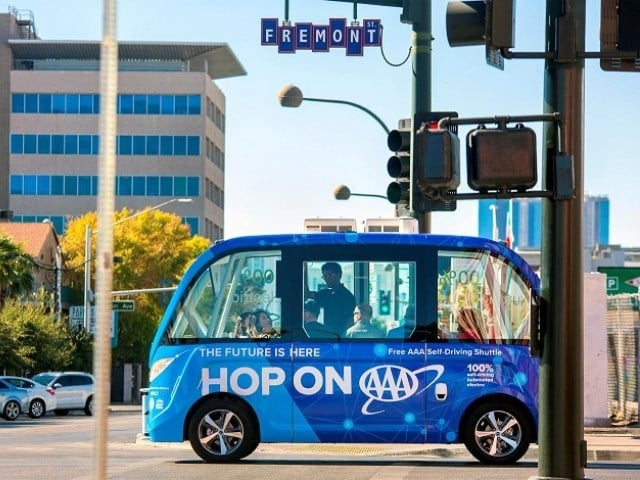
The first public self-driving shuttle, launched as a pilot project sponsored by AAA and Keolis is shown in downtown Las Vegas, Nevada, November 10, 2017.  
PHOTO: REUTERS
The first public self-driving shuttle, launched as a pilot project sponsored by AAA and Keolis is shown in downtown Las Vegas, Nevada, November 10, 2017. PHOTO: REUTERS
Federal transportation safety officials headed to Las Vegas on Friday to investigate a collision this week between a self-driving shuttle bus on its first day of service and a truck, which was blamed on human error.
The US National Transportation Safety Board, which has the power to issue safety recommendations and determines probable causes of crashes, wants to learn more about “how self-driving vehicles interact with their environment and the other human-driven vehicles around them,” said NTSB spokesman Christopher O‘Neil.
There have been other crashes involving self-driving vehicles but this was the first involving a self-driving vehicle operating in public service, O‘Neil said. Four NTSB investigators were expected to arrive in Las Vegas on Friday.
The Navya Arma, an autonomous and electric vehicle operated by Keolis North America, went into service on Wednesday. A few hours later, a delivery truck backed into the stopped shuttle, according to a reporter on the shuttle and one of its sponsor companies.
Las Vegas police issued the truck driver a ticket, the city government said in a blog post. The shuttle’s front end sustained minor damage, including a crumpled front fender, and resumed service on Thursday.
“The shuttle did what it was supposed to do, in that its sensors registered the truck and the shuttle stopped,” the city said.
The Automobile Association of America (AAA) of Southern Nevada, one of the shuttle’s sponsors, said it would assist the safety board’s investigation.
“Working together and sharing information will ensure this new technology is safely implemented for the public, and that’s AAA’s top priority,” the organization said in a statement.
The shuttle is also sponsored by the city of Las Vegas, Keolis North America and the Regional Transportation Commission of Southern Nevada.
Reporter Jeff Zurschmeide, who was on the shuttle at the time of the crash, said the self-driving vehicle did what it was programmed to do but not everything a human driver might do.
“That’s a critical point,” Zurschmeide wrote on digitaltrends. “We had about 20 feet of empty street behind us (I looked), and most human drivers would have thrown the car into reverse and used some of that space to get away from the truck. Or at least leaned on the horn and made our presence harder to miss.”
The crash follows a rising number of incidents involving human drivers behaving improperly or recklessly around self-driving cars. There have been 12 crashes in California alone since September 8 involving General Motors self-driving unit, Cruise Automation. All were the fault of human drivers in other vehicles, GM told regulators.
The NTSB investigated a May 2016 crash of a Tesla Model S that killed a driver using the vehicle’s semi-autonomous “Autopilot” system. In September, the board recommended that auto safety regulators and automakers take steps to ensure that semi-autonomous systems were not misused.

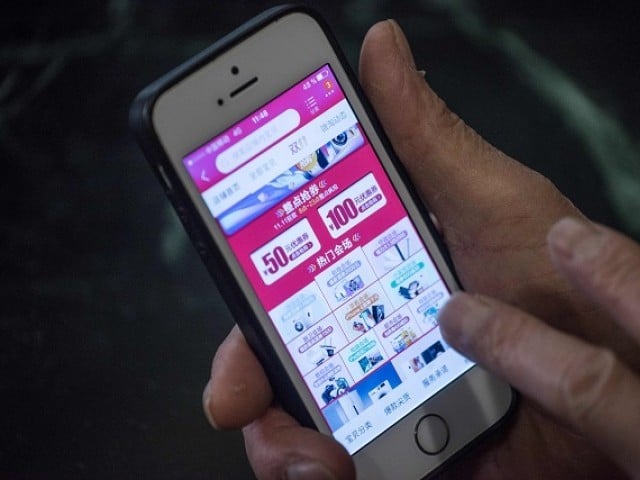
A man looks at a Chinese online store's website on his smartphone in Beijing on November 11, 2017. China's smartphone masses splurged billions of dollars in an e-commerce bonanza on November 11 as consumers rushed to snap up bargains on "Double 11", billed as the world's biggest one-day online shopping festival. 
PHOTO: AFP
A man looks at a Chinese online store's website on his smartphone in Beijing on November 11, 2017. China's smartphone masses splurged billions of dollars in an e-commerce bonanza on November 11 as consumers rushed to snap up bargains on "Double 11", billed as the world's biggest one-day online shopping festival. PHOTO: AFP
China’s smartphone-wielding masses unleashed billions of dollars in e-commerce spending Saturday as they rushed to snap up bargains on “Singles Day”, billed as the world’s biggest one-day online shopping festival.
Also known as “Double 11” for the November 11 date, the event launched in 2009 by e-commerce giant Alibaba kicked off at midnight and ended up shattering the previous year’s sales mark, as it does every year.
Alibaba said that by midday Saturday the gross value of sales processed by Alipay, its online payment system, had equalled the $17.8 billion logged over the full 24 hours last year.
The 2016 amount was itself a 32 per cent increase over the previous year and equal to the annual economic output of Mozambique.
The yearly display of rising Chinese consumer spending power has become a key date for manufacturers and retailers in the country, accounting for a significant share of annual orders for many businesses.
Alibaba rivals such as JD and a range of retailers have joined in, with merchants slashing prices to move goods.
Five minutes after midnight, Alipay was processing 256,000 payment transactions per second, doubling last year’s high-water mark, Alibaba said.
“At 12:07:23 am, the number of payment transactions processed by Alipay surpassed 100 million, equivalent to the total number of payment transactions processed during 2012,” it said.
More than 90 per cent of orders were placed via mobile, the majority on Alibaba’s main e-commerce platform Taobao.

People shop in the Sanlitun district in Beijing on November 11, 2017. China’s smartphone masses splurged billions of dollars in an e-commerce bonanza on November 11 as consumers rushed to snap up bargains on “Double 11”, billed as the world’s biggest one-day online shopping festival. PHOTO: AFP
More than half of China’s 1.3 billion people use smartphones, which have become central to daily life, used for messaging, shopping, news and entertainment, ordering taxis and meals, and serving as digital wallets for a range of point-of-sale purchases.
The day’s transaction volumes are pumped up by many Chinese delaying purchases of mundane items like rice and toilet paper to take advantage of cut-rate prices.
Alibaba launched “Singles Day” as the Chinese online answer to the late-November US “Black Friday” shopping rush.
It has capitalised on China’s burgeoning spending power, the Chinese love of a good bargain, and the growing national addiction to one-click smartphone payments.
E-commerce’s huge growth in China has put New York-listed Alibaba neck-and-neck with Amazon as the world’s most valuable e-commerce company, while also making Nasdaq-listed JD, a Fortune 500 company. Alibaba and JD stock have both doubled this year as revenues surged.
Alibaba is investing heavily in creating an entire user ecosystem encompassing cloud computing, artificial intelligence, automated stores using face-recognition, and is pushing into overseas markets under much-travelled boss Jack Ma, one of China’s richest men.
But environmentalists accuse Alibaba and other e-tailers of fuelling a culture of excessive consumption and mountains of waste. Greenpeace said “Singles Day” deliveries last year created 130,000 tonnes of packaging waste – less than 10 per cent of which is recycled.
It said e-commerce is actually more carbon-intensive than brick-and-mortar shopping, calling “Singles Day” a “disaster for the environment”.
But the growth of Chinese e-commerce has proved a boon to hundreds of once-backward interior town and villages now dubbed “Taobao villages” after re-orienting their local economies toward manufacturing for online buyers.
Analysts say Alibaba will take “Singles Day” global as Chinese e-commerce growth rates are expected to slow in years ahead.
It already has a substantial stake in Lazada, an online retailer in Southeast Asia – a hot e-commerce battleground – and recently launched an electronic trading hub in Malaysia, its first outside China.
Alibaba said hundreds of millions of Southeast Asian consumers will be able to access Taobao this “Singles Day”.
“This is just the start. We will see tens of billions of dollars injected abroad (by Alibaba),” said Li Chengdong, a Beijing-based independent e-commerce analyst. “It could end up dominating e-commerce in developing countries.”
Hong Kong: Apple profits soared by a fifth as its flagship iPhone X hit stores in Asia Friday, with the company predicting bumper sales despite its eye-watering price tag.
Net profit rose 19 percent from a year ago to $10.7 billion in the fiscal fourth quarter to September 30, Apple said. Revenues were up 12 percent to $52.6 billion.
The release of the earnings figures pushed Apple shares up more than three percent to $173.20 and came as iPhone X models began hitting the market in some time zones.
The flagship handset features facial recognition, cordless charging and an edge-to-edge screen made of organic light-emitting diodes used in high-end televisions.
It marks the 10th anniversary of the first iPhone release and hits about 50 markets around the world Friday.
In Hong Kong, buyers who had pre-ordered the phone online queued to pick up their new purchases, saying they were willing to pay for what they saw as a landmark model.
“It’s the 10th-anniversary phone — anyway, other phones like the Samsung are not much less,” said banker Tony Yeung, 35, as he queued outside the Apple store in Hong Kong’s Festival Walk mall.
“It’s convenient. You can unlock the phone just by holding it up to your face in bed after you wake up,” Yeung added.
He said he had bought two of the 64 GB version, costing HK$8,588 ($1,100), one for himself and one for his wife. The 256 GB model costs HK$9,888.
Student Keith Li said all his friends were changing to the new phone and had set aside money for it. Li, 22, had traded in his old phone to help him meet the cost.
Inside the Hong Kong store, those still considering whether to buy were trying out facial recognition after concerns it may compromise the security of the phone.
Nam So, 36, said he was happy to use it, preferring it to touch ID, which opens the phone at the touch of a finger.
“If your thumb is sweaty then it won’t unlock. Face ID would solve this problem,” he told AFP.
– ‘It’s worth it’ –
Around 300 customers waited overnight outside Singapore’s Apple store, the first shop in Southeast Asia to sell the new model.
Supakorn Rieksiri and Kittiwat Wang, both 22, said they had flown in from Bangkok on Thursday to pick up pre-orders of two phones each.
“With all the different features like facial recognition and the bigger screen, it’s all quite worth it,” said Rieksiri, adding that the second handset was a gift for his mother.
Apple is setting an ambitious goal for itself to reinvent the smartphone as it strives to fend off fierce competition from rivals, especially in China.
The iPhone is its main profit driver, accounting for more than half its revenues.
Apple closed out its fiscal year posting a full-year profit of $48.35 billion, up 5.8 percent, on revenues of $229 billion, a rise of 6.3 percent from the previous year.
In the latest quarter, the firm was able to reverse its fortunes in China, boosting overall sales by 12 percent in the “Greater China” region. Sales were up in other regions except for Japan, which saw an 11 percent revenue drop.
Smartphone sales climbed by about a million units to 46.7 million in the three months winding up the California company’s fiscal year, according to the earnings report.
Apple chief executive Tim Cook called it a “very strong finish” to 2017.
Copyright © 2013 MaSooM Studios